by Lynn Soots | September, 2016 | Positive Psychology, Relationships, self-growth
Think for a moment about one of your best friends (perhaps someone that you have been friends with for ages, or got to know more recently and just ‘gelled’ with)…visualise their face …imagine the sound of their voice…maybe looking forward to a planned meet up, or thinking of getting in touch with them very soon… The chances are that you currently have either a smile on your face, a warm feeling in your heart centre, or both. This physiological response clearly demonstrates that experiencing positive emotions – such as those felt when thinking about close friendships – can trigger the release of ‘happy hormones,’ which are good for your health! Friendships can bring sadness too if, for example, trust has been broken, you have grown apart, loss of friends through distance or bereavement, or if you don’t have someone you can call a best friend. This can spark sadness, anger, or hurt and even feelings of guilt for not staying in touch when life gets too busy and there just isn’t enough time… But why are friendships so important to health and wellbeing? Friendship and 21st Century life As parents we encourage and support our children in making new friends and ‘fitting in’, but don’t always recognise the importance of seeking out new friendships as adults. Friendships can dwindle as people move house, job, or grow apart. The pace of 21st century life and raising a family can mean we don’t have the time, energy, or money to socialise, so social network sites such as Facebook have become an important communication channel for many people. But do Facebook friends...

by Lynn Soots | September, 2016 | Community, Positive Psychology, Strengths
Seligman’s Moonshot Goal In Martin Seligman’s seminal book, Flourish, he concludes with what I like to see as his sigh of the soul. He talks of when he was at the first World Congress of the IPPA in 2009 and James Pawelski posed this question: “What vision can we articulate that is as grand and inspiring as John Kennedy’s of putting a man on the moon? What is our moon shot? What is the long mission of positive psychology?” (see Flourish, p. 238) He then talks about how some of the most brilliant positive psychologists have come up with ways to measure human flourishing and suggests that our moonshot goal will be to not only measure flourishing, but to engender more of it. He then states: “By the year 2051, 51 percent of the people of the world will be flourishing.” (see Flourish, p. 240). He calls this goal PERMA 51. Half the World Flourishing: Breaking it Down This truly is a moonshot goal. Just think of it for a minute. This book was published in 2011. Here we are at the end of 2016. That gives us less than 35 years to accomplish this task. Let’s break it down further. In 2011, the world’s population had just hit the 7 billion mark. As of August 2016 the world’s population was estimated at 7.4 billion. By the year 2050 the UN states that the median estimates see the world’s population to reach 9.725 billion. (this article from Wikipedia) Add the average increase of about 286 million per year and you have the number 10.011 billion people. Divide that by...

by Lynn Soots | September, 2016 | Education
As my son (11) and I went to drop off school supplies for my son’s teachers, we approached a school employee who appeared to be the building gate-keeper; she stood strongly in front of the entrance doors. The conversation went something like this: Me: [Smiling], ma’am I am dropping of supplies for the teachers, would it be OK for my son to come with me to help me?” Gate-keeper: [No smile- no words] a swish of her hand motioning to go in. Me: “Why thank you so much, I hope you enjoy your day.” Me to my son: “Is she always like that?” My Son: “Yeah, she is scary, but if you want her to like you or talk to you, you have to bring her coffee.” As adults, we tend to pride ourselves on being a good friend; loyal, responsive and considerate. We greet our friends with a big smile and hello, maybe a hug, show concern, or a verbal acknowledgment of how wonderful it is to see them; it makes them/us feel special and loved. Imagine this behavior modeled abundantly in our schools; what positive outcomes would come from kids seeing this on a daily basis? Unfortunately, this is not always how students feel as they enter onto school campuses where they spend a large portion of their time. What if positively greeting and acknowledging kids as human-beings was a staple in our school systems? Imagine the positive modeling students would experience each day, besides: “hurry, your late, pick that up, you go it wrong, what do you want” etc. Alfred Bandura believed that role models where...

by Lynn Soots | September, 2016 | Health, Positive Psychology, self-growth
This is my Story: Jo-Dee Walmsley I would love to share my story of how I stay positive through using laughter as an exercise without jokes or humor by using Laughter Yoga. Laughter helped me with my relationships, helped me deal with the ups and downs in life and most of all helped me find happiness. By changing my response to events I changed my outcome, which ultimately makes me more positive and helps my relationships at work and at home. It was 20 years ago when I was 20 something …lol that I was living the life, I had reached my dream as a professional performer very young. I was traveling the world, making fantastic money, meeting awesome people, just living the dream …. When BANG I lost it – I got injured. I hadn’t planned for my future, nor saved any money, I had no back up plan – I was alone and scared in Macau and suddenly faced with this depression. So I did what any normal depressed person would do and I went to the movies – I went to see Amadeus. I didn’t realize at the time how this movie would change my life forever but it sure did. Act 1- finding laughter: dealing with ups and downs of life Mozart was a genius and very often misunderstood. He didn’t know how to communicate with people and the way that he dealt with that was to laugh. He laughed at everything and I loved that idea and decided to do the same. I laughed at everything AND IT WORKED!!! I managed to get back...
by Lynn Soots | August, 2016 | self-development
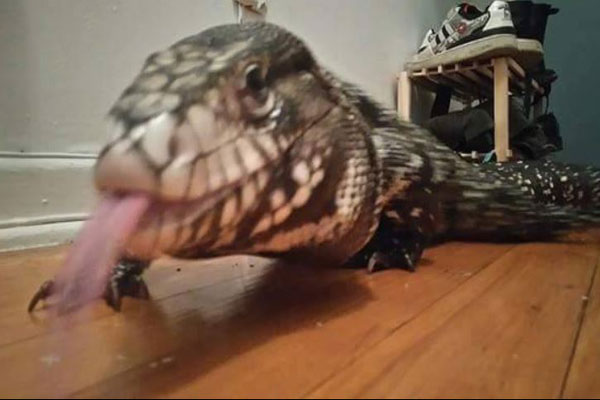
To arrive at a new place you must first leave where you are.”- Christopher J. Stubbs Most boys ask for a puppy. But true to his “march-to-the-beat-of-my-own-maracas” personality, my son announces over Cheerios his intention to adopt a less common pet. “The tegu,” he explains absentmindedly rolling his tongue piercing with his teeth “is a reptile indigenous to Argentina, known for its remarkably large size, affection and capacity to eat anything.” It’s the first and last that have me most concerned, and the second that has me dubious. I’ve seen Lake Placid and remember the brief career Bridget Fonda built off those killer crocodile-induced screams of terror. “Like a lizard?” I ask, my mind racing with scenes of Godzilla (the original Toho films, not the Mathew Broderick remake. Even in moments of panicked anxiety I like to think I maintain a minimum of critical taste.) When it arrives, having travelled by plane in his own seat, (God forbid he should be mistaken for a Styrofoam crate of frozen Nova Scotian lobster in cargo…) I am pleasantly surprised to meet this tiny beady-eyed critter, barely the size of my palm. Except I had forgotten the “remarkably large” part. Tegus apparently reach their remarkable size remarkably quickly. Every month it sheds its skin in a long scaly sheath, up-sizing as he comes into his own. Google “sheds” some light: For reptiles, Ecdysis– the process of shedding the old skin or casting off the outer cuticle is a critical but vulnerable time. I find myself at once grossed and engrossed by the process. How does it feel to peel off a layer...