by Pinky Jangra | May, 2017 | Pinky Jangra, self-growth
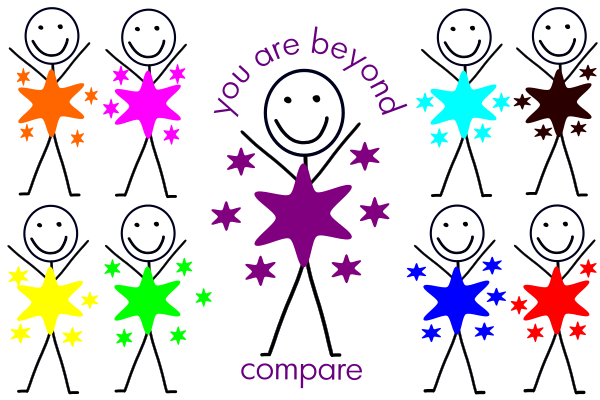
I doubt there’s many people who’ve not had the comparison bug. We can’t help but look at other people and benchmark ourselves against them. Sometimes, this can inspire us to grow and achieve more. But personally, it also makes me feel unhappy and insecure. Somewhere along the way I learned that if someone is better than me, it automatically means I’m not good enough. This belief rarely bodes well because there will always be someone smarter than me, prettier than me, fitter, funnier and more popular than me. There are many people who are more confident, successful, happier and more experienced than I am. Thanks to social media, proof of this is readily available. I can see details of people’s relationships, social life, beauty, status, finances, popularity, material gains, fashion, fitness, career etc. Thanks to the internet, I can delve into people’s lives who I don’t even know. On one hand this is amazing. On the other hand, a casual scroll down my Facebook feed will at some point trigger the comparison bug. No doubt, I will be left feeling like a failure. But, taking a deeper look at this, I realised something. Yes, other people have certain things, but… They are not me Not a single human in existence was or ever will be, exactly the same as me. It’s impossible for anyone to be the same as me because the events that led to my creation are unrepeatable. I come from a very long ancestral lineage ending with two very specific people out of 107 billion who have ever lived, giving birth to me. The material that...
by Pinky Jangra | April, 2017 | Pinky Jangra, self-growth
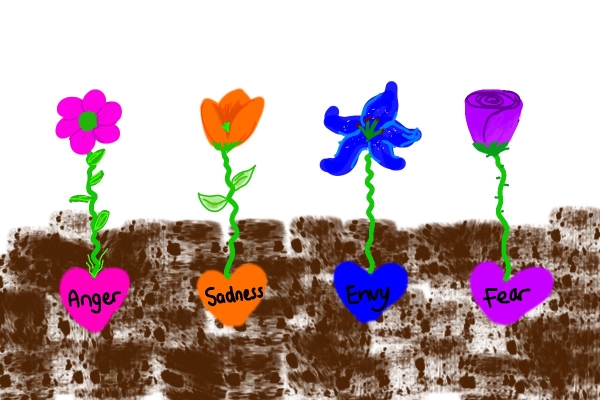
The happiness industry can lead us to believe that negative emotions are bad. That we must and can be happy all of the time. That feeling negative emotion will attract more bad things into our lives and keep away the good stuff. I know from experience that believing this in the past did nothing other than increase my negative emotion. I compounded my pain by feeling pain about being in pain! Recent years have taught me a wonderful lesson – that negative emotions are an important and healthy part of life. Whilst we certainly don’t want to stay in a negative state for longer than necessary, the initial onset of any kind of pain, fear or sadness is important to embrace and understand. Our brains are very good at telling us to escape from pain It natural for us to move away from things that feel bad. Originally this behaviour would save us from the sabre tooth tiger that might eat us. However, most of today’s negative emotions are not indicative of any real threat to our lives. But, as this primitive fear mechanism is so ingrained, it can take time to calm the fight, flight or freeze reactions to negative feelings. However, with practise we see that we can afford to stop and look closely at our pains rather than avoiding them. We can experience and respond to them calmly rather than reacting impulsively. We can investigate them for our own self-awareness and growth. Every emotion has purpose No emotion is pointless. The human being is wonderfully designed with absolute precision. When we understand the purpose behind every...
by Pinky Jangra | March, 2017 | Pinky Jangra, self-growth
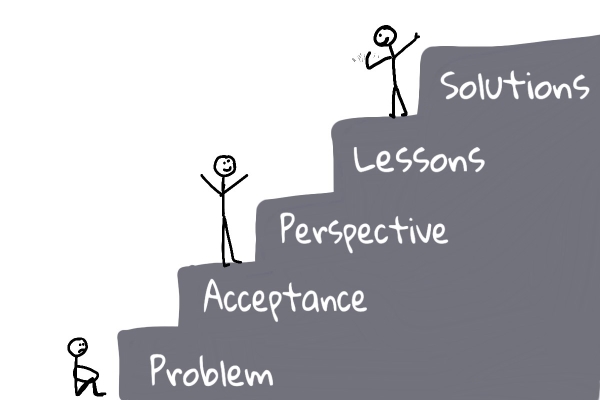
Problems are a part of life. But do they have to be such a big, harrowing and lingering part of life? I’m not so sure. In most cases we can take simple steps to move on from problems and for most day to day problems, we can move on very quickly. Of course when a problem arises it’s totally normal to have a moment of complaining and maybe even blaming, perhaps we have an angry outburst. Tears and fear may also arise – that’s all OK. But hanging around for too long in those emotions and in that state of mind doesn’t help us. Here’s how to get out of that rut and move on: 1. Acceptance Be angry and upset for a few moments if you need to, but then let it go. Fast. What’s done is done. You can’t change it. It’s really that simple. One of the best things we can do in life for our own wellbeing is understand what we can’t control. The past is something we can’t control, so to linger there in your mind is pretty futile. Accept what has happened and move onto step 2. 2. Perspective For most day to day problems such as being late, having a minor argument or the car breaking down ask yourself these questions: Did anyone die? Did anyone get sick? Will this matter in a couple of months time? Will it matter in a years time? Will it matter in five years time? In most cases, the answer is no. So why give it such importance? I recently damaged a hard drive with 1.5...

by Pinky Jangra | February, 2017 | Pinky Jangra, self-growth
‘One of the social idealisms that is commonly injected and parroted is that, “It is more blessed to give than to receive”. […but] If you are blessed by giving to another person then that implies that they would be cursed by receiving’ Dr John Demartini – The Values Factor It’s impossible for us all to be givers without someone at some point having to receive what we are giving. This realisation pulls into question the idea that it’s better to give than receive because you can never have one without the other in equal measure. Giving is wonderful but receiving is not only necessary, it’s also a healthy and beautiful experience. Giving and receiving are also more complicated than they first appear. Giving is not always good for you Sweeping statements about the good of giving fail to address the complexities of the behaviour. Giving can be unhealthy when it is done from a place of obligation and subordination to others. This is often disguised as the inability to say ‘no’. This type of giving frequently points to a lack of self-empowerment and self-esteem. I can testify to that. From my experience, feeling obliged to give and unable to say no depletes you of energy and happiness. It also fuels a corresponding belief that you are unworthy of receiving. What about giving with the intent to receive in return? This may appear unsavoury, but is it? You give your services at work with the intent to receive a paycheque. There is nothing wrong with that. But, in more personal relationships, this approach can feel inauthentic. It may also leave...

by Pinky Jangra | December, 2016 | Pinky Jangra, self-growth
Like me, you may work in the personal growth and development industry. It’s our job to help people grow. Even if you haven’t taken this on as a job, you probably have loved ones around you who you want to help grow. Maybe you’re helping yourself along a journey of development, maybe others are helping you too. Whatever the dynamic, whether you are giving or receiving the help, there’s an important yet simple formula for successful growth. Let’s explore it in a practical example… I recently ran a resilience workshop for women who have experienced abuse. If you haven’t been around survivors of abuse, know that they can carry a lot of trauma and pain. They can feel incredibly helpless, angry and insecure as a result of their experiences. Saying supportive things Imagine if I spent the whole of that workshop only saying supportive things like: I understand your pain, everything’s going to be OK The past has been so hard, tell me what happened I’m sorry for your pain, I’m here for you It’s OK if you can’t find a way forward right now Be patient with yourself What would be the outcome of this type of approach? The participants would probably feel understood and cared for, which is great. Then they would leave the session. What would happen next? Would they grow? If so, how and by how much? Making challenging statements What if I spent the whole workshop only making challenging statements like: It’s possible to find an optimistic viewpoint on your abuse There are things to be grateful for right now We must set goals...
by Pinky Jangra | November, 2016 | Pinky Jangra, self-development
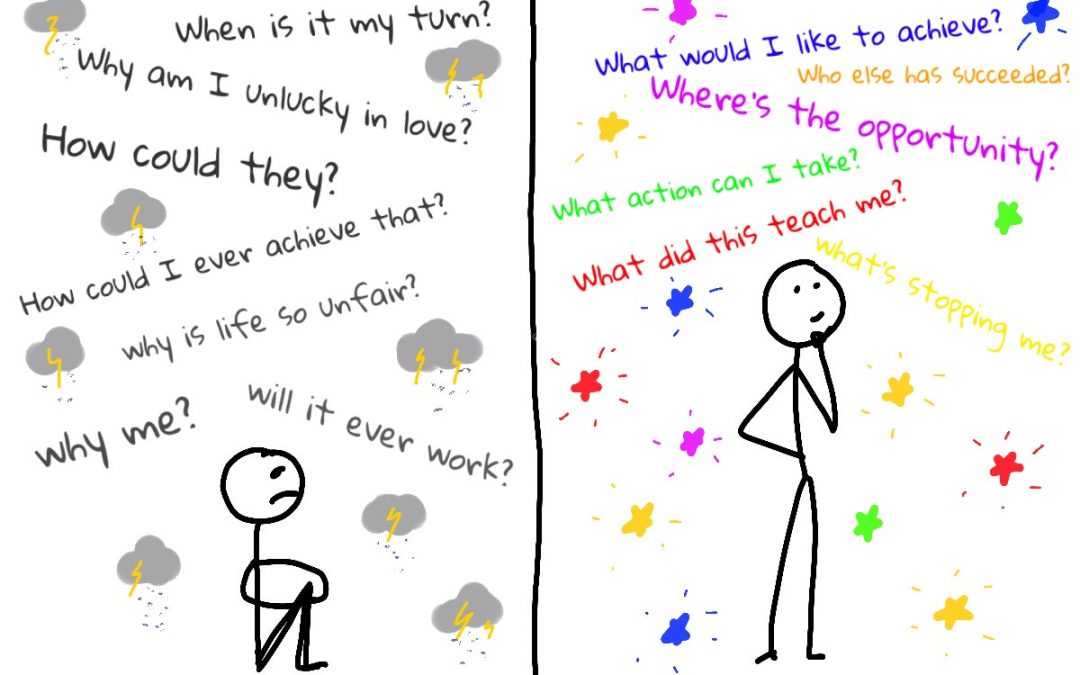
This title is a well known statement in the personal development industry. It may not seem particularly profound at first glance, but it’s BIG when you wrap your head around it. We are always asking questions, sometimes of others and very often of ourselves. These questions have a huge impact on our lives because: Questions lead to answers. Answers generate emotions and drive behaviour. Behaviour determines results. Frequently, this whole process from question to results involves just us. Here’s an example of a common, poor quality question that we ask ourselves, answer ourselves and the rest follows suit: Poor Question to self: Why is my job so rubbish? Answer to self: It’s boring. Emotion and behaviour: I feel stuck, uninspired and drained. I’ll make myself feel better by doing something fun this weekend. Result: I still have to go back to the same job on Monday. Poor quality questions A poor quality question delivers poor quality answers. Such answers create disempowering emotions. From there, we are likely to act out less helpful behaviours and achieve poor results. So let’s flip this example with some quality questions – the more we ask the better: Quality question 1: Would I prefer to find a way of enjoying this job, or get a new job? Answer: I’d like a new job Quality question 2: What am I both good at and enjoy doing, which I’d love to get paid for? Answer: I’m good at and would like to work in […] Quality question 3: What action can I take towards getting work in that industry? Answer: I can start by freelancing on...