by Pinky Jangra | June, 2019 | Life, Pinky Jangra
I could probably write 100 life lessons but, I’ll save that for my future book! I love learning about myself, about others and about this thing we call life. And, I love teaching and sharing my lessons with anyone who’ll listen. If you’re up for listening, without further ado, let’s get on to my top six life lessons: 1. Your childhood determines your adulthood What’s between your ears (your brain, in case you’re wondering!) was 90% formed by the time you were 5 years old. Whilst genetics helped it along in its growth, it largely developed in response to the environment. This means, the first few years of your life were massively influential in the life you experience now, as an adult. Whilst neuroplasticity means the brain continues to change, creating major, self directed change of your psychology and thus your emotions and behaviour, tends to require conscious effort. The reality is that most people don’t put that effort in. They are simply running off childhood patterns – we all are to varying degrees, I’m not sure it’s totally escapable. If you’re seeking to become more self-aware and develop yourself and your life, always start with reviewing your childhood. Some things to consider are: The quality of your childhood relationships: Children who experience abandonment, neglect, parental divorce, continued movement around foster homes etc. are likely to have impaired attachment relationships which in turn, impact their ability to form healthy adult relationships. The emotional connection and nurture you received from adults: Your ability to regulate your own emotions as an adult is based on how they were handled in childhood....
by Pinky Jangra | April, 2019 | Life, Pinky Jangra
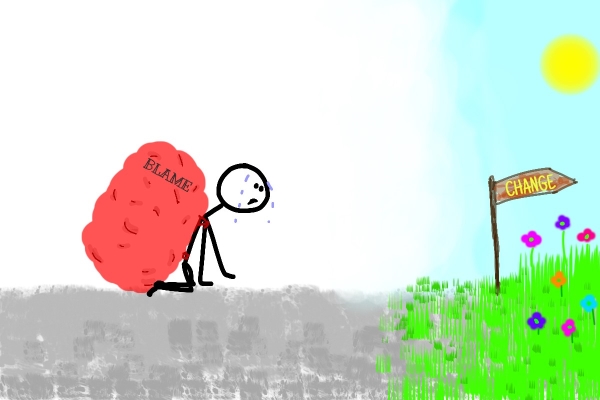
When things are bad in your life, it’s easy to think ‘why me?’. Why do I have a rubbish job? Why is my relationship not working? Why did I lose my phone? Why is my family so difficult? Why am I sick? Why do people treat me poorly? Why did my car break down? Why didn’t I get that job? Why do I have financial worries? Why is MY life so difficult? ‘Why me?’ is usually accompanied by feelings of being unlucky, unworthy and alone. There’s often blame attached to ‘why me?’, whether that’s blame you place on yourself, other people, the wider world or some invisible force. ‘Why me?’ paints you as a victim, a lonely victim who’s been singled out for various forms of misery and strife, whether they be passing or long term, trivial or significant. Some of my recent ‘why me?’ experiences include getting parking and speeding tickets, having professional challenges and some really bad online shopping experiences! These are largely trivial, thankfully, but I really felt the ‘why me?’ mindset; I was angry, I felt like there was a dark cloud over MY head. Why ME? Why NOT you? This might feel like a big leap, so let’s walk the bridge from ‘why me?’ to ‘why NOT me?’ together, with some examples: Those speeding and parking tickets I mentioned? I read that the government makes millions of pounds from these things so, clearly thousands, if not millions of us have had them. It’s not just me. Those professional challenges I was experiencing? I spoke recently to someone who had similar problems. It’s not just...
by Pinky Jangra | February, 2019 | Pinky Jangra, self-development
I consider myself a rule breaker. Growing up in a strict Indian environment there were many rules laid out for me. It’s expected that as an Indian woman, I should be conservative, quiet and live a life of servitude. I should not draw attention to myself – especially not the attention of men. I should not drink or socialise. I should be faithful to my religion and culture by taking part in fasts and other religious practices. I should get married when my parents tell me to, and to whom they think I should marry. And then I must have babies and settle down with the in-laws. I should learn to cook and nurture a family. And should I also be interested in a career, I should be an accountant or a doctor. In this environment there’s no room for ‘me’ and my truth, there’s only room for ‘them’ and their rules. I had to either break the rules or break myself. I broke the rules. I chose me. Are you willing to stand out? If you want to break some rules, you have to be willing to stand out for, in most people’s eyes, all the wrong reasons. It can be a constant battle of being judged, ridiculed, condemned and even emotionally blackmailed for being true to you and not to ‘them’. This applies to all rule breaking, not just my personal examples above. The person who leaves their high flying job to become a monk. The one who sells their mansion to move into an ecofriendly, self sustaining home in the woods. The person who drew an...
by Pinky Jangra | December, 2018 | Emotions, Pinky Jangra
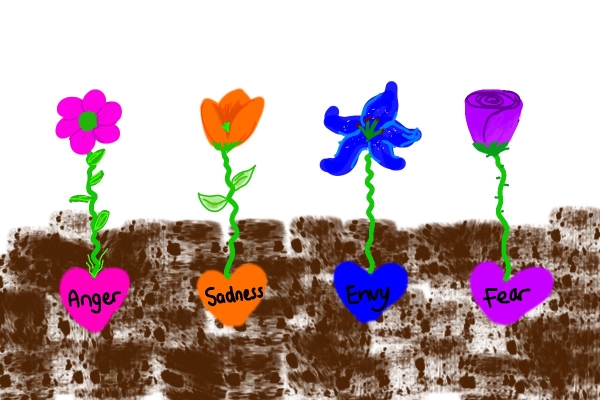
Sadness, anger, frustration, fear, shame, envy, resentment, guilt, stress, boredom, anxiety, depression, overwhelm, confusion, grief, unworthiness, loneliness – there are many unpleasant emotions. And let’s be honest, they feel icky. We don’t like them. We don’t want to experience them. They can all just go away. I’m very good at making them ‘go away’ and I wanted to share some of my tips with you. Here’s six: 1. Fix the outside world It’s that thing/ person/ situation ‘over there’ that is the cause of our unpleasant emotion – so we must fix it. Control it. Change it. Make it the way you want it. Once we’ve done that, our pains will disappear. Bingo. 2. Blame the outside world You might not be able to fix the thing outside of you that’s causing you pain, but at least you can blame it. Blame the person, the government, the situation, the job, the product, the economy, the dog – anything that keeps attention off you is a win. Sorted. 3. Get a quick fix of pleasure We should utilise quick fixes of pleasure to make us feel better for a minute. My go-to’s are shopping and movies. Food and alcohol are also popular choices. The modern world puts all these things at our fingertips. Easy peasy! 4. Lie Two words will help you here: ‘I’m fine’. Use them as much as possible. Whether in conversations with yourself in your head, or with others outside of you. If you can repeat these words enough, you’ll start to believe them. Ignorance is bliss. 5. Keep busy This one is great – if you...
by Pinky Jangra | October, 2018 | Pinky Jangra, self-growth
Alarm bells started ringing when I stopped to ponder how much of my life is driven by a single intention: to avoid rejection. It’s more of my life than I care to admit. In fact, more of my life than I had realised, until I stopped to look at it more closely today. I find myself people pleasing, hiding my true feelings, not saying ‘no’ to people, not saying ‘yes’ to people, sitting politely and staying quiet – all to avoid rejection. Fear of rejection and the shame associated with rejection (I think it’s the shame we’re more scared of, than the rejection itself) is such a stifling state of being. We’re so scared that someone will stop liking us or think badly of us, that we dare not make any bold moves. We shut down, we stop growing, we don’t step forward, we hold ourselves back, we stay small. Why on Earth are we doing that? Fear of rejection is critical to our survival When we’re children, we need adults to look after us until we mature. If an adult rejects a child and that child is left alone, that child will not survive. Therefore, a child’s brain is primarily focussed on attachment and being accepted is a matter of life and death. As adults and social creatures, we need to build and maintain healthy relationships for our wellbeing, survival and propagation of life. If we weren’t aware of what might cause people to reject us, we may dart around upsetting people and be left standing all alone. Fear of rejection has its place in our wellbeing and...
by Pinky Jangra | August, 2018 | Pinky Jangra, self-growth
I went to an amazing workshop a few weeks ago by one of my favourite humans on the planet, Dr Gabor Maté. I wrote pages of notes as he shared wisdom on psychosomatics, child development, trauma, addiction and healing. Many things he taught struck a deep chord with me. What stuck out in particular were two things he said about the seemingly elusive experience of self-love: 1. Self-love is not a gooey proclamation of self-appreciation Those are my words, not his; but, the message essentially was that Gabor had never experienced self-love as a gushy feeling about himself. I resonated with that because neither had I. Yet, I was seeking that kind of self-love, I thought that was what it is meant to look like. You know that feeling you get when you look at another human or animal that you love? I thought I was meant to feel that way when I looked at myself. I also thought I was meant to become so self-assured and believe that I was worthy of all the goodness in the world. I thought that was self-love; and for the most part, I was trying – but largely failing – to achieve it. Maybe that is part of self-love but, Gabor awakened me to something much more subtle, profound and less gooey: his experience of self-love was being able to be present with his own pain. Instead of trying to avoid pain – which is not just sadness/ hurt but could also be insecurity, anxiety, fear, frustration, shame or anger – or, trying to wangle out of it with the latest self-help...