by Julie Ostrow | May, 2016 | Health, Julie Ostrow, Uncategorized
I recently used that phrase when talking with a dear friend about unresolved issues within my family. It is interesting—and challenging—to me how present issues can ignite a spark of a distant memory and launch it into the present moment. It feels as if I have gone excavating for the largest rocks at the bottom of the well only dig up the heaviest rocks and put them in my bag. And so I carry on with a heavy load of useless burdens. I suppose it is a blessing and a curse to be so keenly aware of what is going on with me emotionally. Being aware that I have a bag of burdens is the step in the right direction. The family pain hasn’t fully healed for me because I’ve never been able to say my piece. And that has gravely affected my peace. Because I’ve been treated as if my voice doesn’t matter, I fight to create a safe place for communication and openness, allowing everyone’s voice to be heard. Are there unresolved issues in your life? How do you move forward? I believe it is important to move forward yet, I think it is essential to know what to do with “the it” we’re moving away from. I have never believed that simply “moving on” would make everything better. The ABC’s of Moving Forward A = The stage where ‘the painful event’ happened. B = Acknowledging what happened. Feeling the feelings. Transform your feelings about the incident into a healthy perspective. Sometimes we can’t do this alone. It’s ok to reach out for help. C = Moving...

by Lynn Soots | May, 2016 | Uncategorized
The more I read about the importance of early childhood experiences, the more I wish I’d done things differently with my kids. And I’m not the only one – most of us with older children seem to carry a twinge of regret. A need to be in-tune with children Sometimes I wish all parents to-be were required by law to take parenting classes. Not just the type that talk about boundaries and about keeping our children out of harm’s way. But the type that teach us the importance of tuning into their emotional worlds and of helping them make sense of their lives. It seems that in all the stresses and busyness of life, sometimes taking out the time to focus on the greatest responsibility we bear, and to nurture the most important relationship of our children’s lives becomes a luxury we put aside for another day. Making sense of feelings, emotions and needs The reason I was reminded of this yet again was because of what happened at my ten year old daughter’s swim meet this past weekend. Her friend’s mother wanted her child to finish her snacks, but she didn’t. Me and my daughter sat a couple of rows away, and shortly, the friend came up to us and whispered miserably to my daughter: “My mum doesn’t get it that I’m not hungry”. “Did you check with your tummy?” I heard my daughter whisper back and I almost gasped in surprise. In less than a fraction of a second, I was swept up and transported back to her delightful infanthood. There she was, too busy to eat....

by Lynn Soots | April, 2016 | self-development
Oh, I am so jealous Recently, at the start of one of my classes, I found myself wrapped up in a savoring sense of jealously. As the student expressed their intention of travel to Japan, I found myself jealous that it was not me making the trip. I had lived in Japan for over five years and loved each and every second. In my head, I wanted to go back and be the one with the plane ticket; I wanted what he was going to have. I went on a flight reservation site just to see how much it would cost to fly there. I looked up pictures and even found a snap shot of my tiny apartment in Okinawa situated on the seawall where I spent many evenings soaking in the salt-filled air and wondering how life would turn out for me. I even looked up a few old friends on Facebook and commented on their post, to which I was pleasantly surprised that I received responses back. The emotion of jealousy, like pessimism often rides with a side car of negative connotations. There are two basic definitions of jealousy. The first associated with the negative feelings when one perceives another desires that person’s love interest. The seconds, related more to what I am discussing here, the dictionary defines jealousy as: an unhappy or angry feeling of wanting to have what someone else has. Overall, this tends to still skew towards a negative connotation. For someone to “accuse” a person of being pessimistic or jealous certainly draws out a barrage of defensive feelings— the projectionist “Why, how dare...

by Lynn Soots | April, 2016 | self-development
Is one better than the other? Introvert/extrovert Do we value diversity in the workplace? Of course we do I hear you say! So let me put it another way, do we value diversity of personality types equally in the workplace? Consider this, if two people go for promotion and they have equal skills, but one is an extrovert and the other is an introvert, who is most likely to get the job? In her book Quiet, Susan Cain suggests western culture values boldness, verbal skill and individuality, which are typically attributes of extraverts. Could this lead to extroverts having an advantage in getting the best jobs, the promotion, the big breaks? Bendersky suggests that because extroverts ‘express confidence, dominance and enthusiasm’ they are initially valued more highly than other team members. In other words we may give the extravert the job as we interpret their confident and enthusiastic zest for the role as evidence of their ability to deliver (they are our superhero archetype). But note the word ‘initially’…yes there is a downside… Expectation of a personality type This leads to higher expectations being set of the extrovert’s ability to perform, which leads to disappointment if they fail to rise to the lofty heights expected of them. Also these higher expectations mean their actual performance tends to be evaluated more critically. In other words we may over estimate what extraverts can realistically achieve and then be more critical of their failure to deliver on our expectations. But what of introverts? Conversely, Bendersky found that lower expectations of introverts (and neurotics) at the start of a task meant that their...
by Lynn Soots | April, 2016 | Strengths
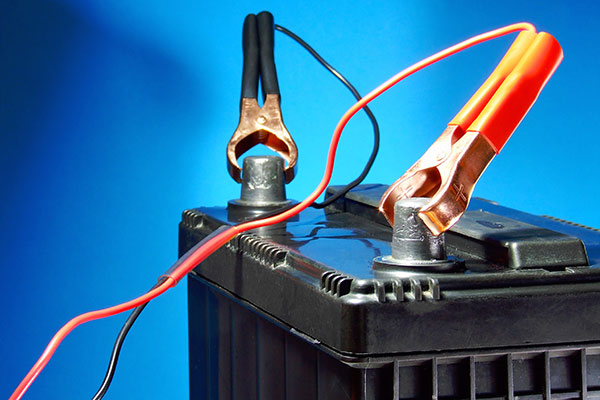
What is Realise2? A couple of years ago I was introduced to something called Realise2. I quickly learned this to be an advanced developmental tool to assess people’s individual strengths. Realise2 consists of various sections that are really useful to distinguish the difference between a strength and a skill. This may confuse some people, but I will explain. Have you ever been good at something but it actually felt a bit like a chore to do? You may be very skilled at multi-tasking and taking on various duties at the same time but it actually leaves you feeling tired and maybe even overwhelmed. In fact it can be downright draining at times. So, this is what Realise2 would refer to as a skill opposed to a strength. If you have these or other qualities but they drain you then they cannot be considered a strength. To be considered a strength you must be skilled at it and it must energise you and make you feel good as well. Knowing how not to deplete your energy In the Realise2 model this type of skill would be distinguished as a learned behaviour that should be controlled and regulated so that it does not deplete your energy levels too much. A learned behaviour is something that we generally picked up in childhood from our parents or guardians. It is a behavioural trait we learned at a young age to do that has become so ingrained in us we do it automatically and without thinking. Learned behaviours could include listening, being empathetic, being compassionate and showing courage. If being compassionate and a good...