by Lisa Jones | September, 2018 | Mindfulness
Using savouring to expand our mindful experiences into appreciation There is a great deal of information out there that suggests we should engage in being more mindfully in the present moment. This blog explores what this means, and considers whether savouring might be an alternative way to be present, whilst also being appreciative of the world around us. What is mindfulness? According to Gilbert and Choden (2013) mindfulness is the “deliberate intention to observe the activity of the mind in a non-judgemental way” (p.257). It is typical of many of us to be caught up in our thoughts and not be fully present with what we are doing, thinking and feeling at any given time. Mindfulness is really beneficial to encourage us to slow down, stop and be in the here and now. An important aspect of mindfulness is the intention to not judge. This is to accept how you feel, what you see, and simply accept what is. By being more aware of what we are feeling, thinking and doing, we can make more informed choices about our well-being and how we might impact other people. Limitations of mindfulness Mindfulness has many valuable benefits to us that are being used more and more in therapy and activities that help us cope with our hectic lives. But like all interventions there are limitations. For instance Kashdan and Biswas-Diener (2015) tell us we need to be ‘mindless’ sometimes. We cannot sustain mindfulness all the time. We rely on the subtle messages picked up subconsciously, where we make sense of the complex world quietly in the background as we move through...
by Laura Acosta | September, 2018 | Strengths
“Nice to meet you. It’s a wonderful starry night, have you seen the epic full moon tonight? Do you also enjoy taking photos of colorful sunsets or feel a bit reassured when you spot the moon while walking alone at night? Isn’t being alive and able to witness the beauty of nature such a gift? I get excited and touched just thinking about it. I thought it was just me being weird or overly sensitive until I took the VIA strengths test and found that my top character strength is ‘appreciation of beauty and excellence’ – did you know that was a thing? My dream is to express this love of life, this feeling of magic through writings and paintings. What is your dream?” Bam! Instant connection. While above introduction might seem long-winded and maybe even a bit heavy (depending on the atmosphere and location it might be appropriate or not – although you might even be able to break the prevalent mood if you stand with some confidence). Enthusiasm, curiosity and rawness are contagious. Who wants to spend time talking with a lifeless, boring person? Whether the other person enjoys sunsets and full moons or not, they will be intrigued. You may or may not connect over last week’s gorgeous pastel colored sunset. In any case, you showed them a bit of your quirks and they might inquire about the strengths test mentioned. Or after some warming up they might share a bit about their hopes and dreams. In any case, it will be a memorable meeting. Most introductions tend to be superficial and boring. We are afraid...
by Kimberley Wakefield | September, 2018 | Parenting
Recently I had the opportunity to be heavily involved in the planning and execution of the 4th Canadian Conference on Positive Psychology. As a part of my role as Marketing and Communications Chair I had the opportunity to interview Dr. Ryan Niemiec, one of the world- renowned experts on character strengths. During the interview, I told Dr Niemiec about an event that happened during the course of my experiment of parenting with character strengths in mind. A Rare Parenting Win My daughter was heading to sleep away, summer camp for the first time ever, it was a big moment and I wanted to send her with a little something special to help her along. I prepared a package for her to take that included, on the top page, a list of her top five character strengths as identified in the Via Character Strengths survey, a free online resource available to all. This was meant as a little prompt for her to remember her specials talents and the strengths that she could call on in times of challenge. I anticipated that she’d see it, roll her eyes at more of mommy’s efforts to infuse positive psychology into her life, and toss it into the bottom of her bag for me to find crumpled up when I unpacked her things. Much to my genuine surprise, when I went to visit her, I found it pinned to the beam above her bunk in her camp cabin. Through proud tears, I took a picture for posterity sake and banked it as a parenting win, that happen all too rare if you ask me! The...
by Lena Britnell | August, 2018 | Mental Health, Strengths, Uncategorized
When I first heard about Positive Psychology and character strengths it was from the most unlikely of sources. A positive psychologist (I forget who) was quoted in a glossy magazine spread about body image as saying something (I forget what) about overcoming anxiety by choosing to find happiness instead. Full disclosure, my first reaction was to roll my eyes and laugh out loud and have the following rapid-fire train of thought: ’There is a positive psychology (scoff)?! What’s the point of that?! Some more experts telling us to choose not to be sad but to somehow ‘be happy’ instead (huff and another eye roll)?!’ I was my anxiety At this point, I had spent a decade in therapy and on medication for anxiety and depression. During this time, I was alternately encouraged to try and look on the bright side, be more optimistic, lower my expectations or just generally pull my socks up because life wasn’t so bad, was it?! Trying to take this approach to dealing with my mental health had very little to do with what I was good at or enjoyed doing (my personal strengths) and over the years caused me considerably more anxiety rather than less. I have dealt with generalised anxiety disorder and a lovely if complicated combination of additional symptoms pointing to major depressive disorder and a form of obsessive compulsive disorder (known as Pure O) for most of my life. Being a high achiever, a perfectionist and (learned) extrovert it took a combination of life circumstances, genetics, bad choices, whatever, to produce a series of breakdowns in my twenties and thirties which...
by Nicola Morgan | August, 2018 | Nicola Morgan, Relationships
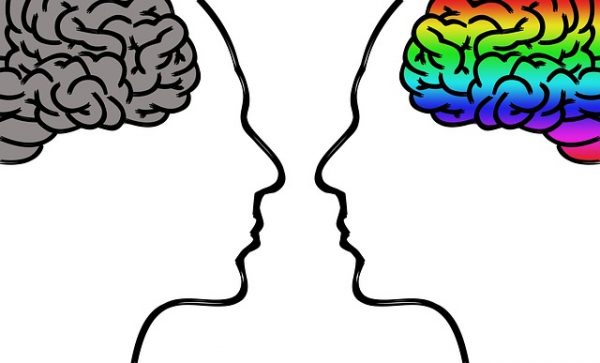
“They **** you up, your mum and dad. They don’t mean to but they do” – Philip Larkin, This Be the Verse I have two teenage daughters aged 13 and 16; when I tell people this, I am often met with a sharp intake of breath – oooo, teenagers, that’s a difficult age! Potentially it could be and I make no claim to have all the answers or be able to guarantee navigation through the teenage years but they can also be loads of fun. There are certainly some skills from the work of positive psychologists that can be learned that can give you a reasonable chance of a happy and successful relationship. Empathy and understanding of teenage development Firstly, it can be helpful to understand some of the differences between teenagers and adults. For example, research has shown that teenagers need more sleep (but at different times) from adults, they have a greater urge to take risks, a far more acute sense of embarrassment, a stronger reliance on their peers and friendship group and a great deal of pressure and stress from different sources to those that adults would consider stressful. These differences, it seems, often relate to the development of the brain and have only come to light since the ability to look into the working human brain using MRI technology has developed. (Morgan, 2013) (Blakemore, 2012) This understanding may not only help your sense of empathy but perhaps enhance your curiosity to listen mindfully and communicate compassionately. Mindful listening In the best-selling book ‘How to Talk so Kids will Listen and Listen so Kids will talk’ (Faber...